A three-year collaboration across four Native nations, the highly anticipated Substance of Stars is primed to open at the Heard Museum in Phoenix on November 8. The permanent exhibit will explore the creation myths of the Haudenosaunee, Yup’ik, Diné, and Akimel O’otham peoples through a rotating collection of curated and commissioned objects and art containing elements that relate to their sacred origin stories.
The project is co-curated by Sean Mooney and Chuna McIntyre (Central Yup’ik) with advisory support from 14 tribal representatives and Indigenous artists who have individually selected the pieces from their own cultural production to be included in the exhibition.
 Steven Yazzie (Diné), The Sky-Dome features Ship Rock (Tsé Bit'a'í—“Winged Rock” in Diné Bizaad/Navajo language), New Mexico; still from video
“This show has a lot of components to it,” says Mooney. “The point was to look at artwork from the point of view of the traditional culture who made them. The pieces were selected because they represent some elements of a creation story but they don’t necessary illustrate it and that is based on the interpretation of that individual curator.”
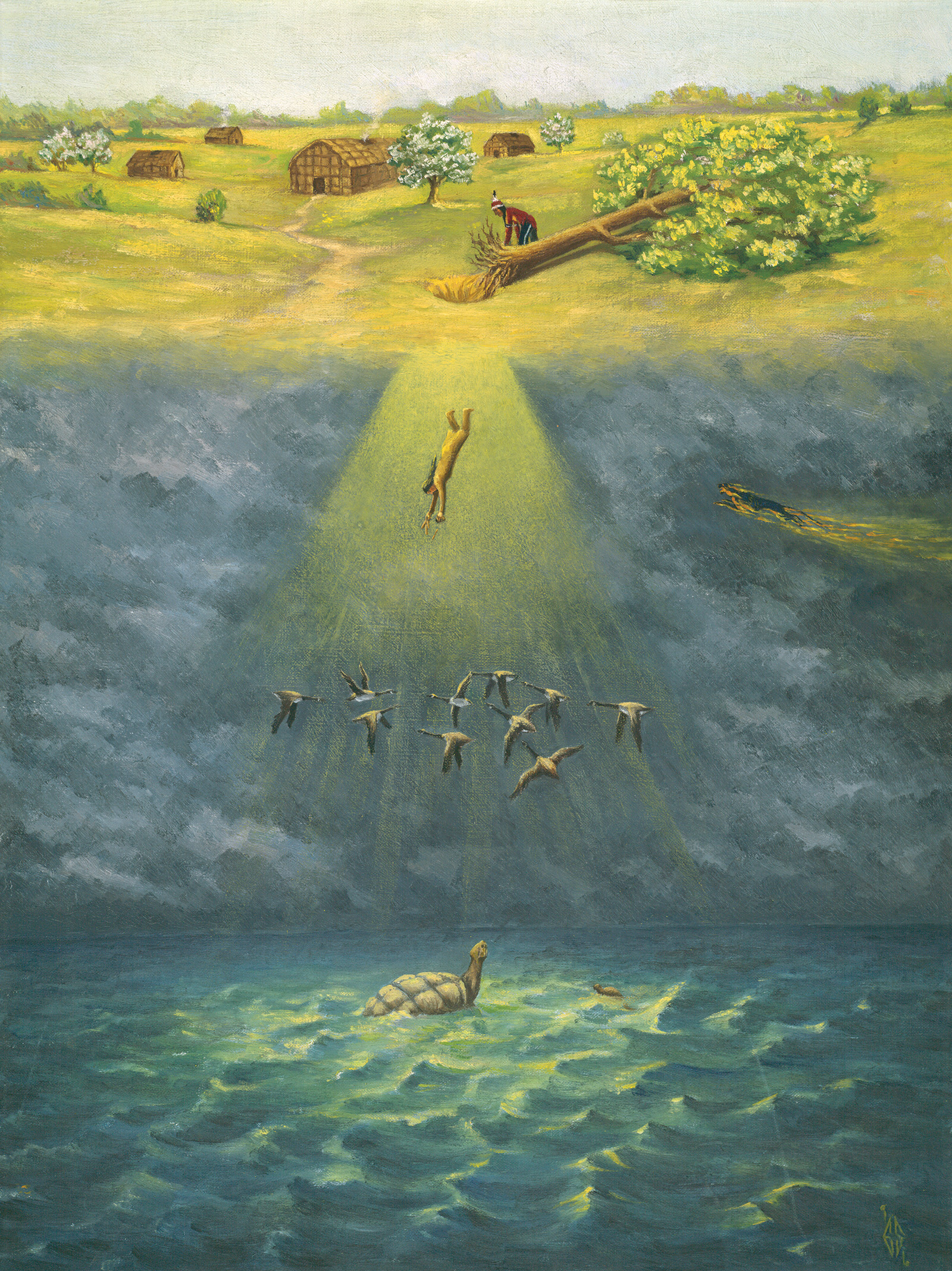 Ernest Smith (Seneca, 1907-1975), Tonawanda, New York. Sky Woman (1936), oil on canvas. Rochester Museum and Science Center collection, 36.331.1
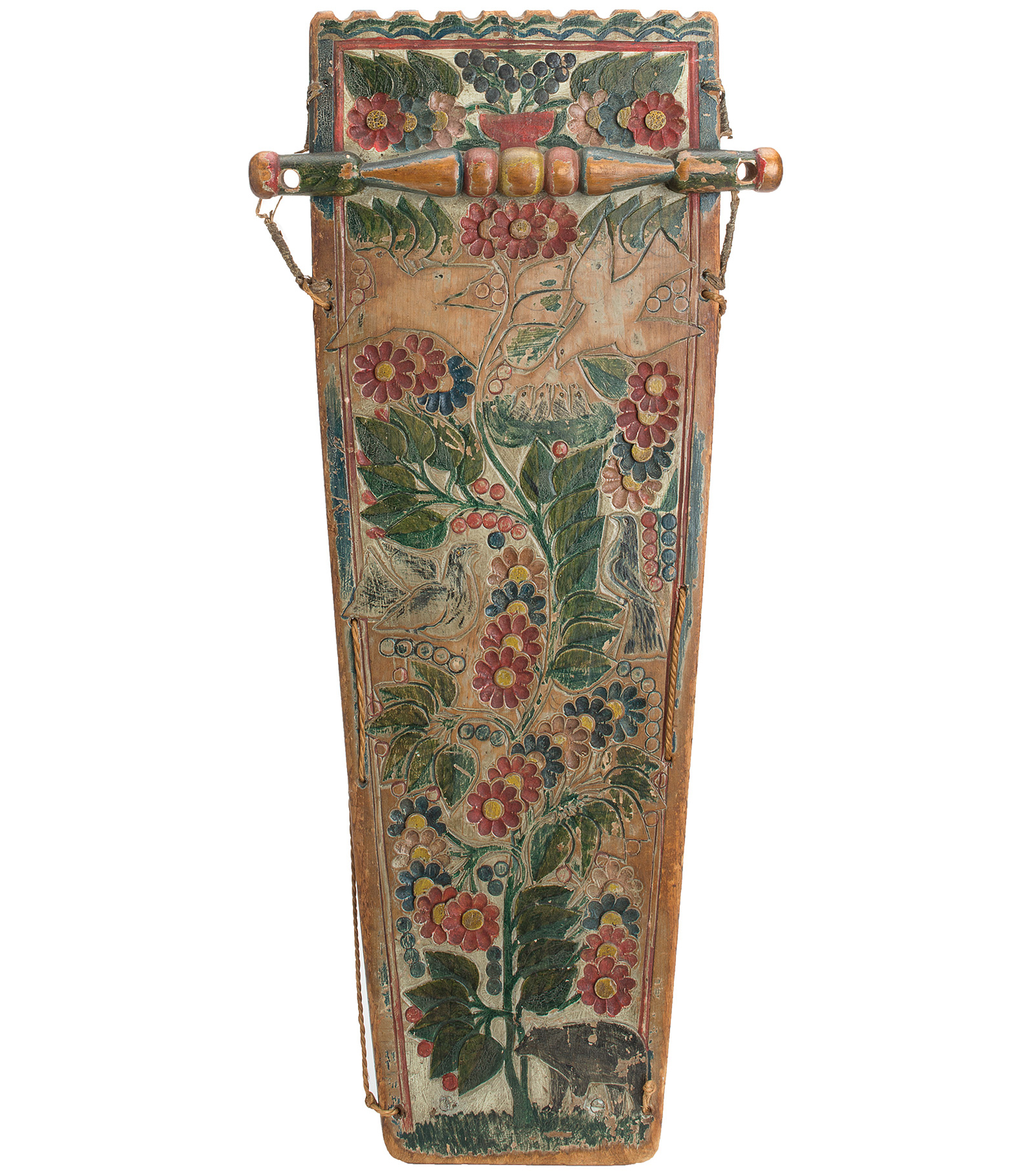
To name just a few examples, two Seneca cradleboards were utilitarian but purposefully created to represent the two sacred twin brothers of the Haudenosaunee; Ernest Smith’s (Seneca, 1907-1975) Sky Woman depicts a moment in the Haudenosaunee story of the world’s creation while the basket weavings of the O’odham peoples often feature a man-in-the-maze design that symbolizes the passages of life.
Perhaps the biggest buzz about this new addition to the Heard surrounds the Sky-Dome, a multi-media video montage that transports viewers between regions of tribal importance—from the woodlands of Upstate New York to the deserts of the Southwest to Kotzebue, Alaska, and other areas, including the Bering Sea coast during an Iñupiat whale hunt.
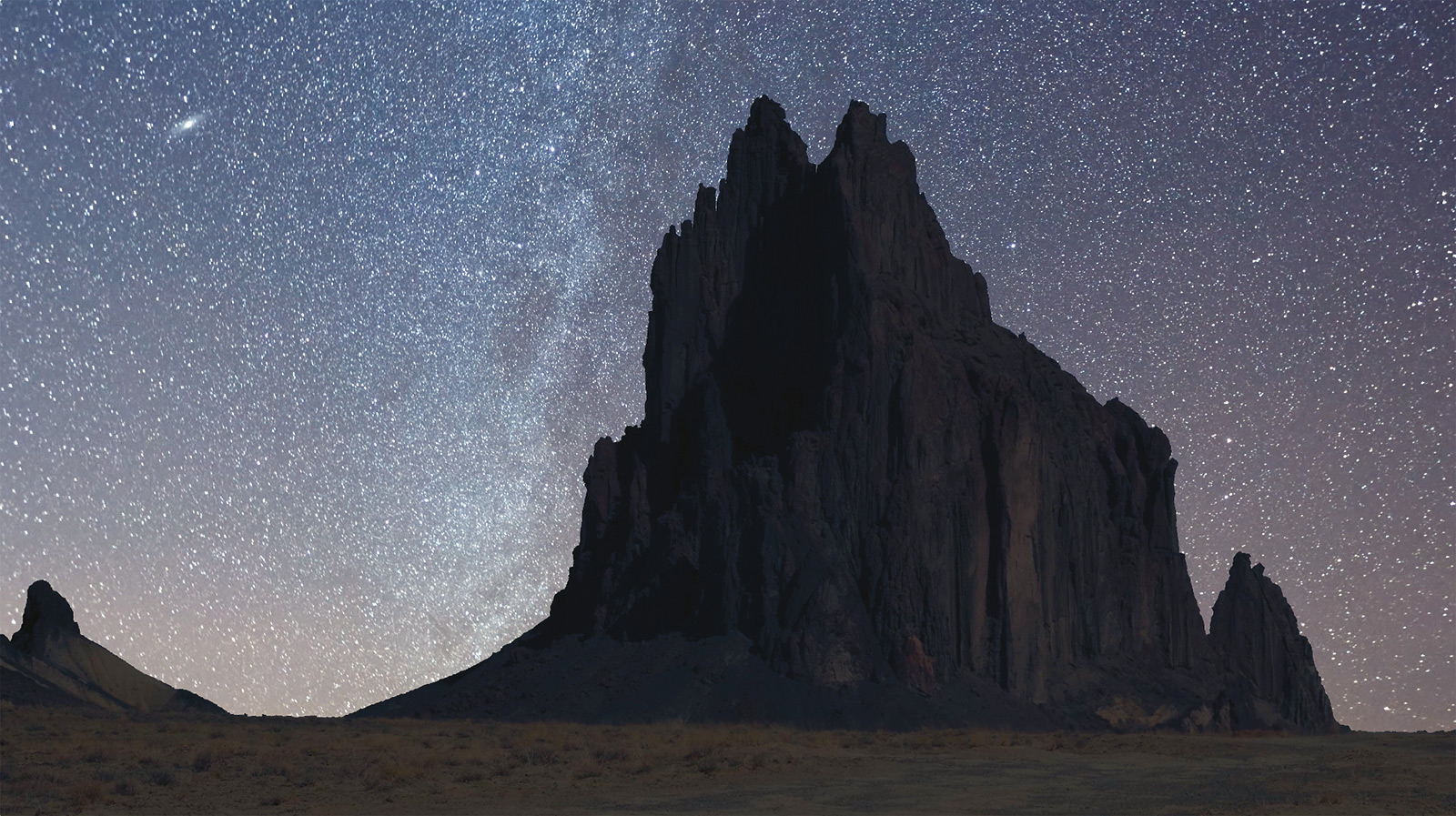
Steven Yazzie (Diné), The Sky-Dome features Ship Rock (Tsé Bit'a'í—“Winged Rock” in Diné Bizaad/Navajo language), New Mexico; still from video
“The idea is that when visitors walk into the museum they literally walk into the landscape,” explains Mooney. “To be immersed in the variety of land, water, and sky imagery and reinforce the fact that the earth is a sacred place—that the relationship between people and the land is sacred.”
Mooney is careful not to over-sensationalize the Sky-Dome experience. “It is meant to create a feeling of calm and of place,” he says “The soundscape consists of wind moving through trees, waterfalls, even the underwater sounds of whales and seals. It’s meant to give you the sensation that you are there.”
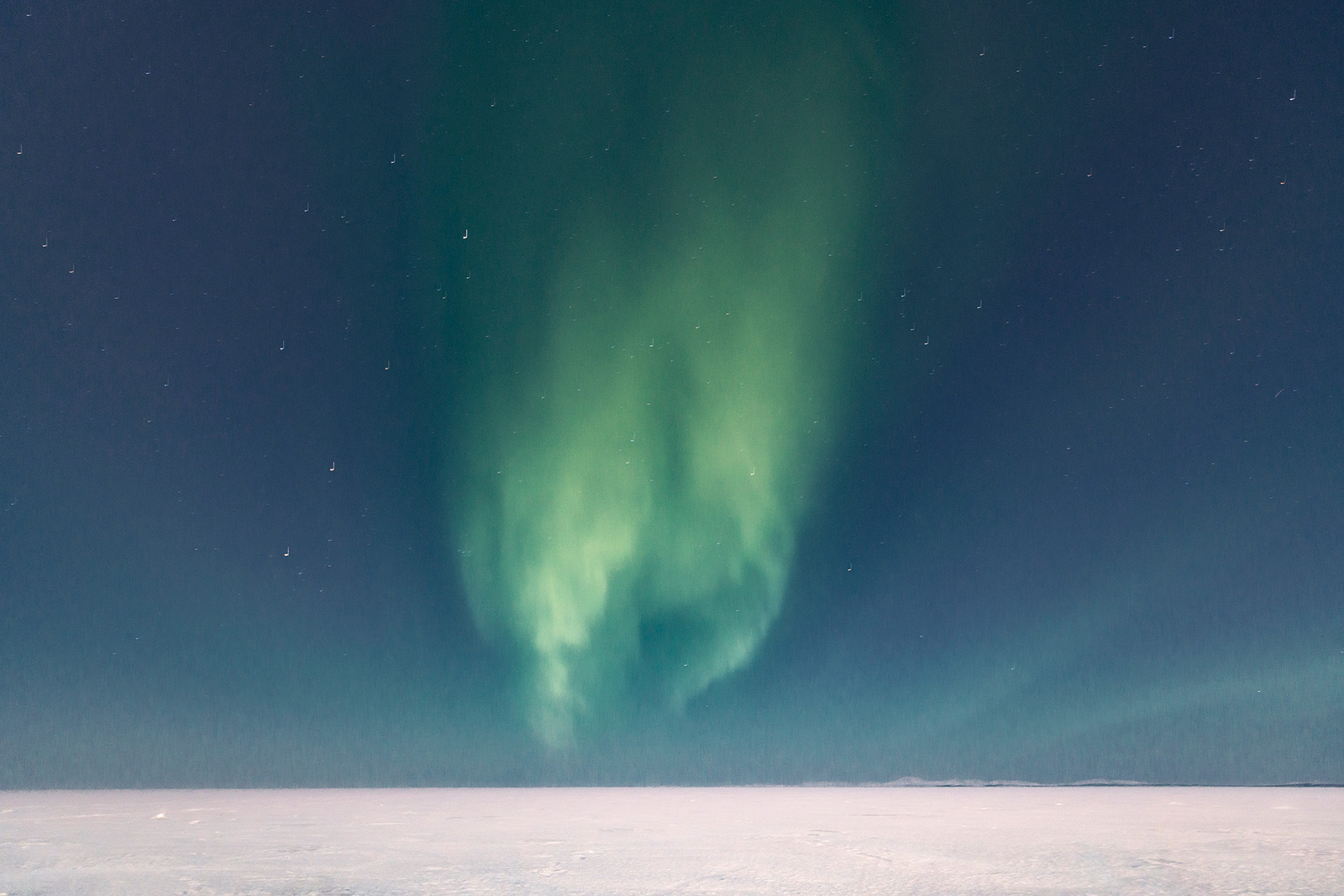 Kiliii Yüyan (Nanai/Hèzhé), Arctic Aurora Borealis seen from Greenland, photo
Throughout the 10-minute loop, a fiber optic star map remains overhead. It depicts Nahookos, two constellations that form a unit with the North Star and figure prominently in Navajo cosmology, as it appears in the Arizona sky during each of the four seasons.
Origin stories vary greatly from tribe to tribe—even, in some cases, within tribes—but the creation of humans and the earth is often tied to the sky and the stars. “Hence the exhibition’s name,” Mooney says. “We are all the substance of stars ourselves.”
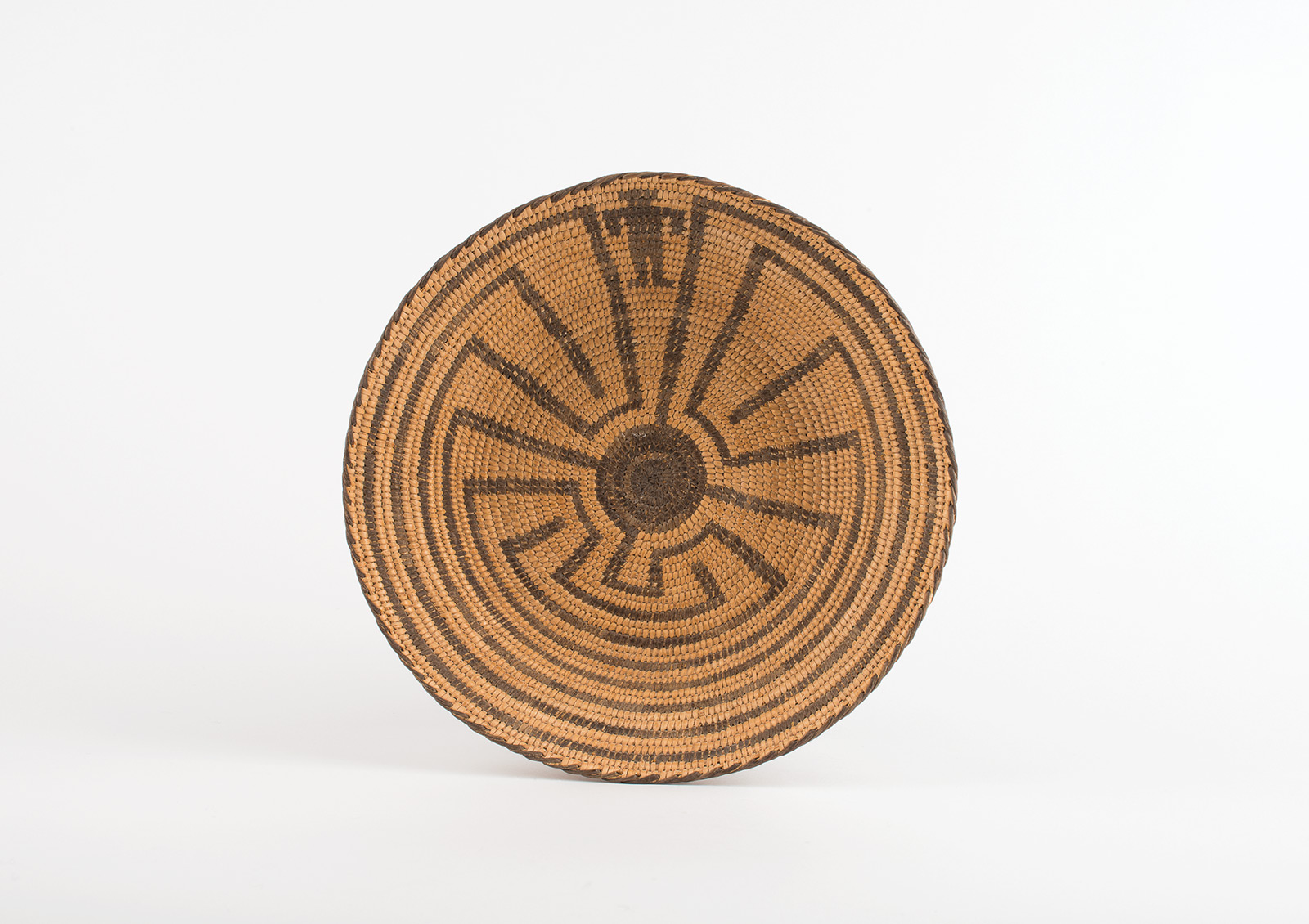 Akimel O’odham, Basket with “Man in the Maze” motif, early 20th century, willow and martynia, 9¾”. Heard Museum collection 3586-1.
The exhibit will also have some smaller digital pieces, including a video by artist and exhibit advisor Jamie Jacobs (Seneca) in which he reads the Seneca address, from which the term “sky dome” comes, in his tribal language. “[Sometimes called the thanksgiving prayer], it announces that we are all of one mind; we are all in agreement and we are grateful,” says Mooney. “Prayer creates a metaphorical spiritual ladder between earth and sky. This is an opportunity to pause [before leaving] and observe the logic of what that means.”
Opens November 6, 2022
Substance of Stars
Heard Museum 2301 N. Central Avenue, Phoenix, AZ 85004
(602) 252-8840, www.heard.org
Powered by Froala Editor